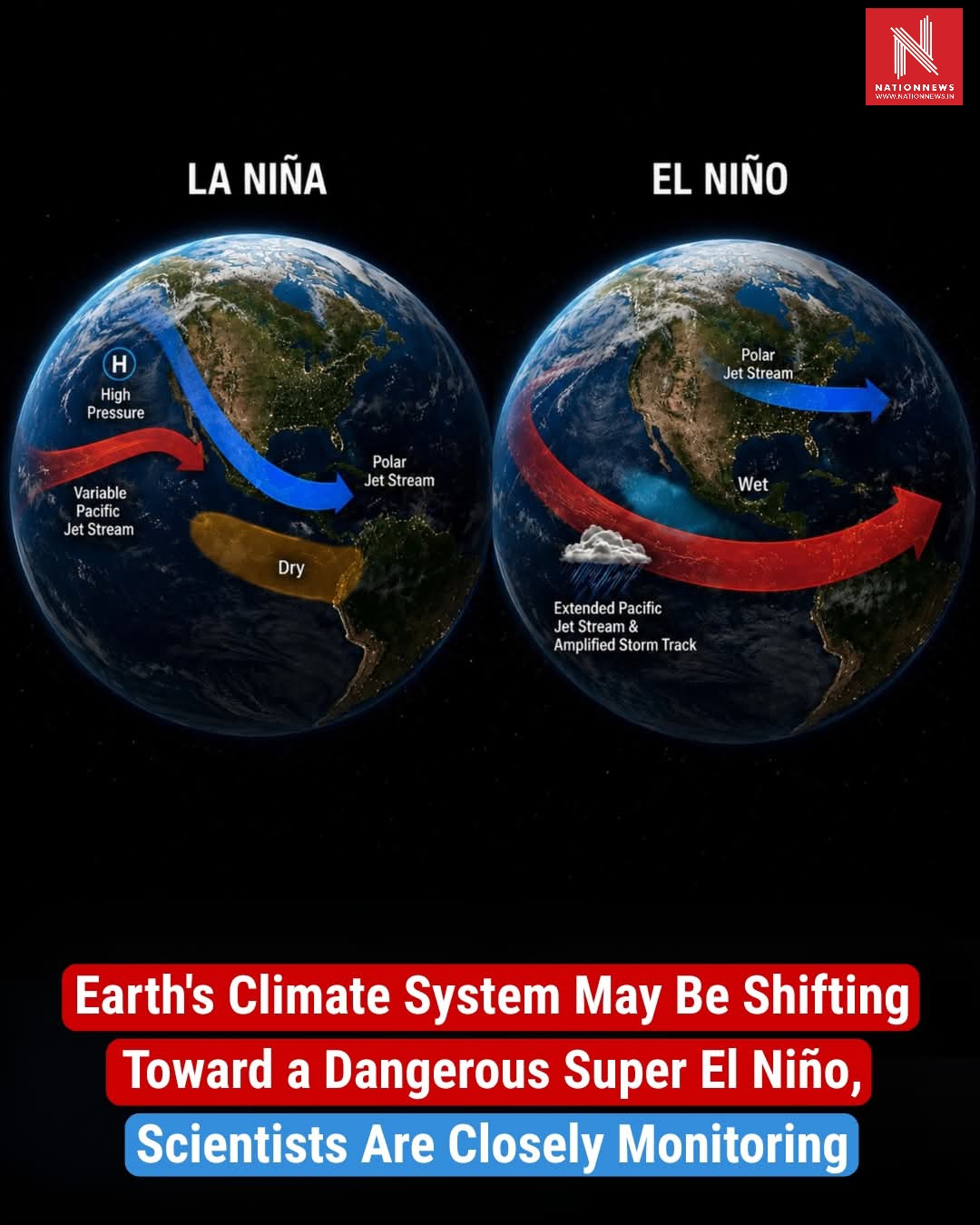


“Super El Niño” Warning? Scientists Fear 2026 Could Bring Record-Breaking Global Heat
Scientists around the world are closely watching unusual warming beneath the Pacific Ocean, raising concerns that a powerful El Niño event could develop by late 2026 — potentially pushing global temperatures to dangerous new highs.
Massive pockets of warm water are now moving eastward through the Pacific via powerful oceanic movements known as Kelvin waves, a key early signal often linked to the formation of El Niño conditions.

Why Experts Are Concerned
Forecast models increasingly suggest that El Niño could emerge later in 2026, though researchers say it is still too early to confirm how intense it may become.
If the event strengthens significantly, it could temporarily supercharge global temperatures and disrupt weather systems across the planet, triggering:
Extreme heatwaves
Heavy floods
Severe droughts
Unpredictable monsoon patterns
Agricultural disruptions
Climate experts warn that a strong El Niño often acts like “fuel on the fire” for an already warming planet.
Is a “Super El Niño” Really Coming?
Social media speculation around a possible “Super El Niño” has exploded online, but scientists say the term remains premature for now. While conditions are becoming more favorable for El Niño development, predicting its exact intensity this far ahead remains difficult.
Researchers stress that even if a major El Niño does occur, the biggest driver of rising global temperatures is still long-term human-caused climate change — not just natural weather cycles.
The Bigger Climate Reality
Recent years have already shattered global heat records, and another strong El Niño could add even more pressure to Earth’s climate system in 2026–27.
For now, scientists continue monitoring the Pacific closely, as the world braces for what could become another major climate turning point.
#ElNino #SuperElNino #ClimateChange #GlobalWarming #WeatherAlert #ClimateCrisis #EarthScience #Heatwave #WeatherUpdate #BreakingNews #Environment #Monsoon #ClimateNews #ExtremeWeather


