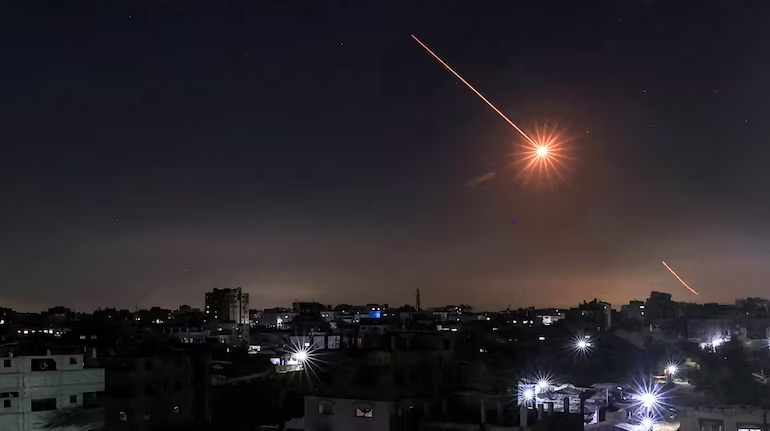


Trump defends war with Iran as conflict widens, military names first service members who were killed
-Middle East War Escalates: Key Developments on Day Five of U.S.–Israel Conflict With Iran
Middle East War Escalates: Key Developments on Day Five of U.S.–Israel Conflict With Iran

The conflict between the United States, Israel, and Iran intensified on its fifth day as military strikes expanded across the Middle East, political tensions escalated globally, and casualties continued to rise.
From deadly drone attacks on U.S. forces to fresh airstrikes in Tehran and Lebanon, the war is rapidly widening, raising fears of a broader regional conflict.
Trump Defends Military Action Against Iran
Speaking at the White House, Donald Trump defended the decision to launch military strikes against Iran, arguing that the intervention prevented a far larger global catastrophe.
Trump said that without the operation, Iran could have triggered a nuclear conflict and threatened multiple countries across the region.
His administration maintains that the strikes were necessary to counter Iran’s missile capabilities and military infrastructure.
Israel Expands Military Operations
The war widened as Israel Defense Forces launched additional attacks on targets in Tehran and expanded operations into Lebanon, where the Iran-backed militant group Hezbollah has fired missiles toward northern Israel.
Israeli troops moved into southern Lebanon while airstrikes targeted dozens of Hezbollah positions, including weapons depots, command centers, and missile launch systems.
The Israeli military also said one of its advanced F-35 fighter jets shot down an Iranian fighter aircraft over Tehran, marking a historic first for the aircraft in combat.
Iran Threatens Harsh Punishment for Supporters of Strikes
Iran’s judiciary chief Gholam Hosseini Mohseni Ejehei warned that anyone inside the country supporting the U.S.–Israeli air campaign could face severe punishment.
He said individuals cooperating with “enemy forces” could be prosecuted under wartime laws, potentially facing the death penalty if convicted.
The remarks signal the Iranian government’s increasingly hardline response as the conflict intensifies.
Rising Casualties and Human Toll
The humanitarian cost of the conflict continues to grow.
According to the Iranian Red Crescent Society, at least 787 people have been killed in Iran since the fighting began. However, independent reports inside the country suggest the death toll may be significantly higher.
The United States has also suffered casualties. The United States Department of Defense confirmed that six American service members were killed in a drone attack on a military facility in Kuwait.
Four of the soldiers have been identified:
Capt. Cody A. Khork
Sgt. 1st Class Noah L. Tietjens
Sgt. 1st Class Nicole M. Amor
Sgt. Declan J. Coady
Two additional victims have not yet been publicly named pending family notification.
Drone Attacks and Missile Strikes Across the Region
Iran’s retaliatory attacks have targeted several locations across the Middle East.
Key incidents include:
A drone strike hitting the U.S. consulate in Dubai
Drone attacks on intelligence facilities in Iraq and Saudi Arabia
Missile launches targeting U.S. and allied bases across the Gulf
U.S. Central Command said American forces have struck nearly 2,000 targets in Iran during the first 100 hours of the campaign.
According to military officials, the operation has destroyed hundreds of Iranian missiles, launch systems, drones, and several naval vessels.
Regional Governments Warn of Wider War
Several Gulf countries have warned that Iran’s retaliatory missile fire could drag neighboring nations deeper into the conflict.
The United States has also issued urgent travel warnings, urging Americans to leave 14 countries in the region due to escalating security risks.
U.S. embassies in Beirut, Kuwait, and Saudi Arabia have temporarily closed because of the war.
Global Political Tensions Rising
The conflict is also creating divisions among Western allies.
Pedro Sánchez publicly rejected U.S. pressure to support the war effort, saying Spain would not allow American military aircraft to use its bases for strikes on Iran.
In a televised address, Sánchez said his government’s position could be summed up simply: “No to war.”
Uncertainty Over War’s Duration
Back in Washington, lawmakers remain divided over the conflict.
Some members of Congress argue the administration has not clearly explained its long-term goals, while others warn that limiting presidential authority during the crisis could undermine military operations.
A recent poll suggests many Americans are skeptical about the war, with concerns growing that the conflict could last months or even years.
A Region on Edge
As the fighting enters its fifth day, the Middle East remains on high alert.
With Israeli strikes intensifying, Iran continuing retaliatory attacks, and regional militias joining the confrontation, analysts warn the conflict could quickly expand into a broader war involving multiple countries.
For now, the world is watching closely as the rapidly evolving crisis reshapes the geopolitical landscape of the Middle East.